

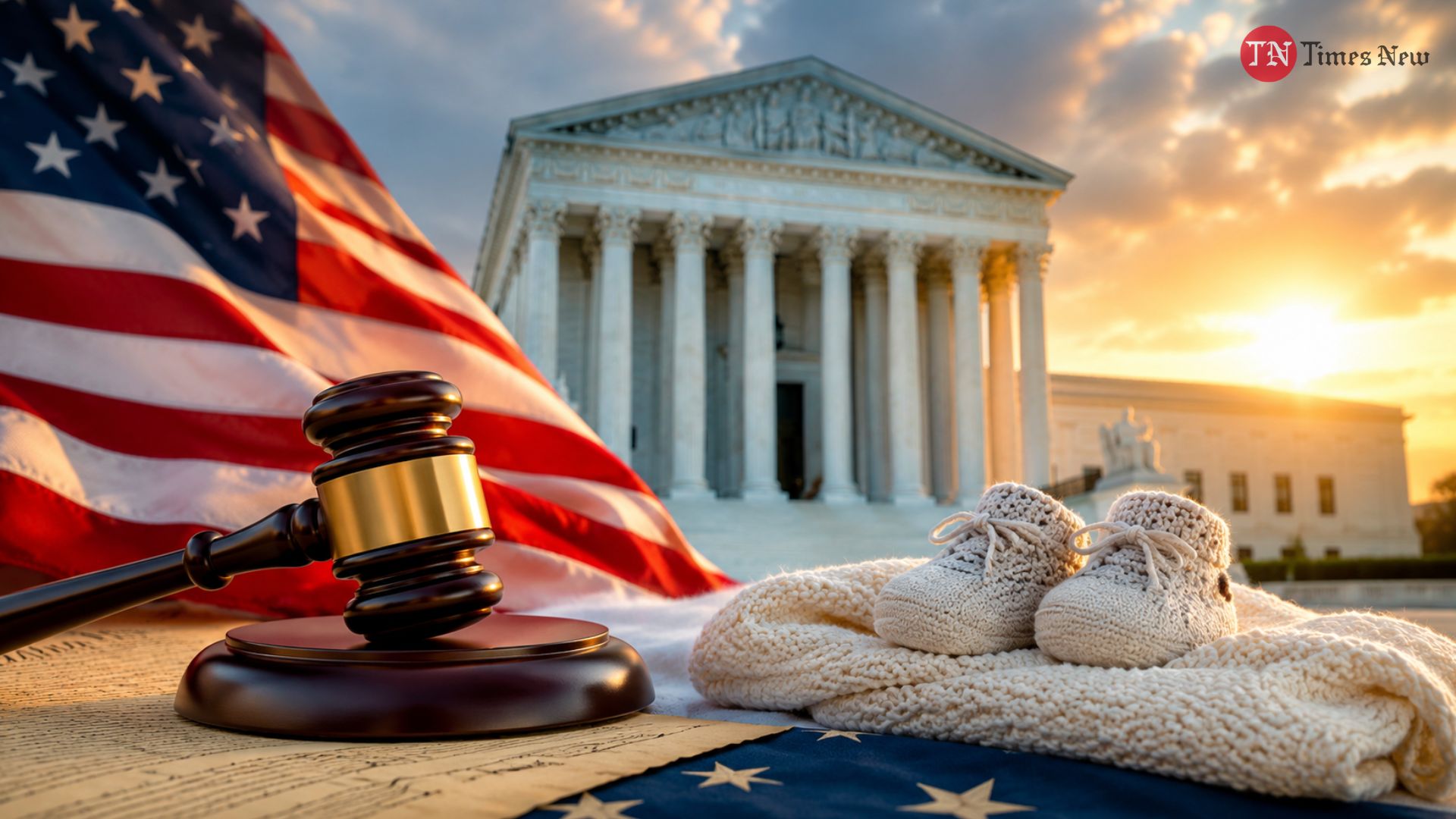
The U.S. Supreme Court is expected to deliver a landmark ruling on Tuesday on whether President Donald Trump can enforce his executive order restricting birthright citizenship, a key element of his immigration agenda. The order directs federal agencies to deny automatic U.S. citizenship to children born in the country if neither parent is a U.S. citizen nor a lawful permanent resident. The case centers on the interpretation of the Citizenship Clause of the 14th Amendment, which has traditionally been understood to guarantee citizenship to nearly everyone born on American soil.
The legal challenge, brought through a class-action lawsuit in New Hampshire, argues that Trump’s order violates the Constitution and contradicts the Supreme Court’s 1898 ruling in United States v. Wong Kim Ark, which affirmed birthright citizenship for children born in the United States to foreign nationals. The Trump administration, however, maintains that the constitutional phrase “subject to the jurisdiction thereof” excludes children of undocumented immigrants and those whose parents are in the country temporarily, arguing that citizenship should be limited to those whose parents have permanent allegiance to the United States.
The highly anticipated ruling comes amid a series of immigration decisions that have largely favored the Trump administration. Experts estimate the policy could affect the citizenship status of as many as 250,000 babies born each year if allowed to take effect. With the decision expected on the final day of the Supreme Court’s current term, it is widely viewed as one of the most consequential immigration cases in recent U.S. history, carrying significant constitutional and social implications.
Pic Courtesy: google/ images are subject to copyright