


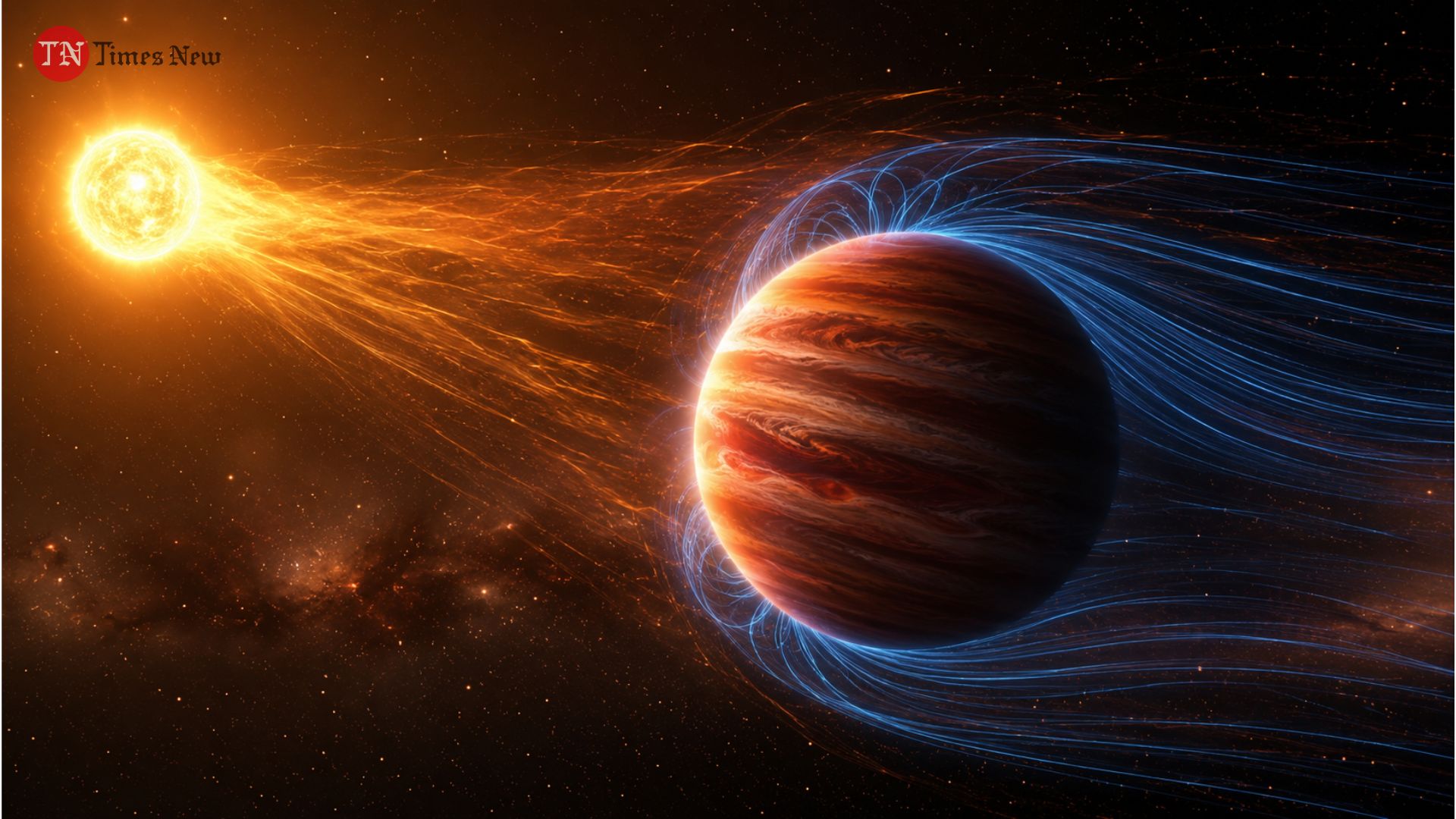
Astronomers have uncovered the strongest evidence yet that planets beyond our solar system possess magnetic fields, a key feature shared by most planets in the solar system. The discovery comes from observations of seven giant “hot Jupiter” exoplanets using telescopes in Chile and Hawaii, with findings published in Nature Astronomy. Researchers found that the hottest planets exhibited unexpectedly weaker atmospheric winds, suggesting the presence of magnetic fields influencing their atmospheres.
The studied exoplanets orbit extremely close to their host stars, resulting in scorching temperatures on their permanently sunlit sides and powerful winds flowing toward their cooler dark sides. However, scientists observed that the hottest planets had slower-than-expected winds. According to lead researcher Julia Seidel, the most plausible explanation is that magnetic fields interact with charged particles in the planets’ atmospheres, effectively slowing the winds and dissipating energy.
While none of the seven gas giants are considered habitable, the findings offer important insights into planetary evolution. Magnetic fields help planets retain their atmospheres over long periods, a factor that can influence the potential for life on rocky worlds. Researchers say the results provide compelling evidence that magnetic fields may be common among exoplanets, opening new avenues for understanding how distant worlds develop and survive in extreme environments.
Pic Courtesy: google/ images are subject to copyright


