


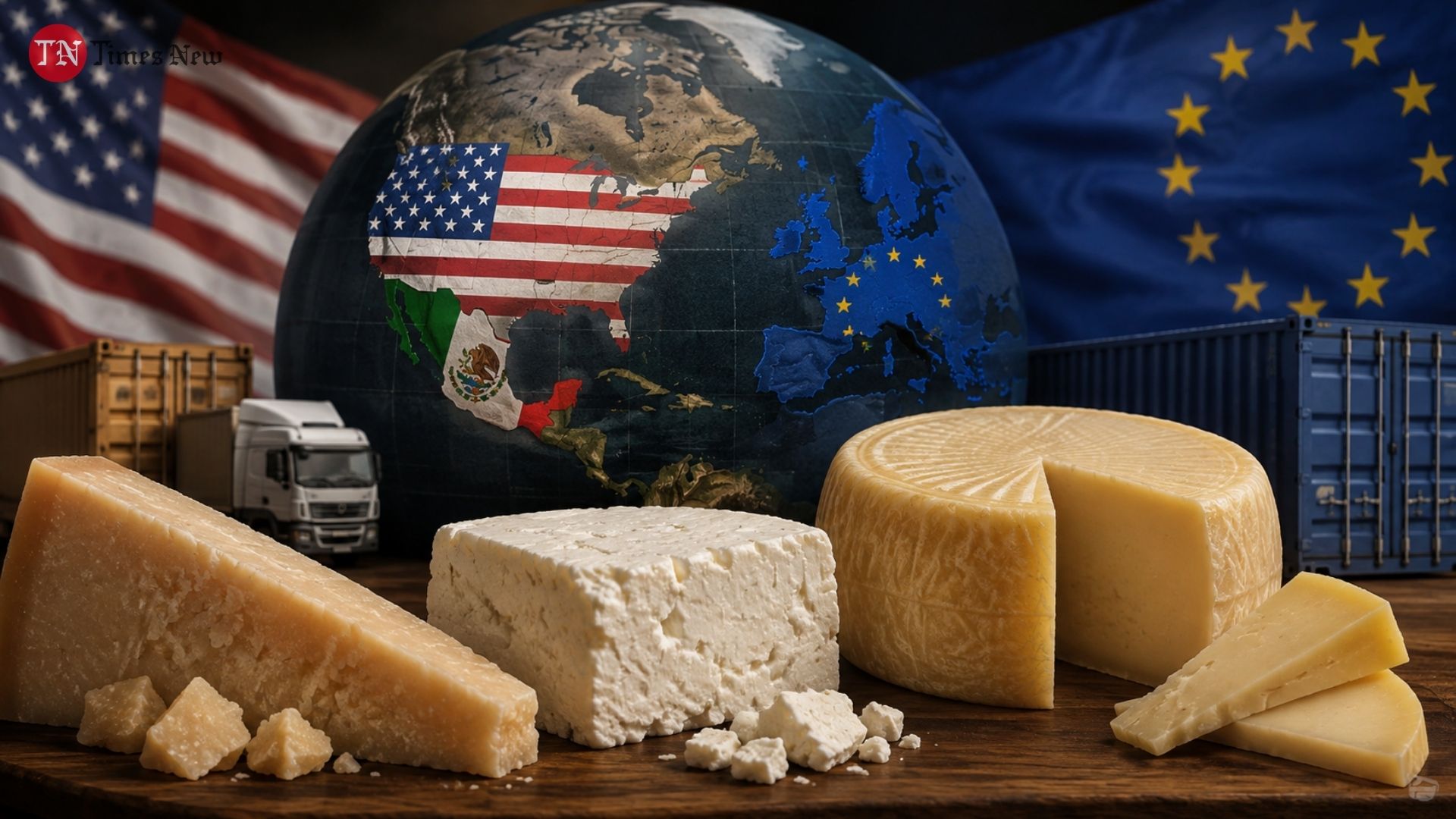
A dispute over the use of traditional cheese names has emerged as a sticking point in U.S.-Mexico trade negotiations. Washington is objecting to Mexico’s new trade agreement with the European Union, which grants special protections to hundreds of European products, including Parmigiano Reggiano, feta and manchego. U.S. officials argue that such protections could prevent American producers from selling cheeses in Mexico under commonly used names such as parmesan and feta.
The disagreement comes as the U.S. and Mexico negotiate an interim trade deal and prepare for broader discussions on renewing the USMCA. Mexico has not yet completed the ratification process for its EU agreement, giving Washington an opportunity to press its concerns. The U.S. Dairy Export Council says American cheese producers must retain access to the Mexican market, where the United States exports roughly $1 billion worth of cheese annually, compared with about $200 million in EU dairy exports.
Mexico is one of the world’s major cheese-consuming countries, with imports accounting for nearly 30% of domestic consumption. Mexican cheesemakers have criticized inexpensive U.S. imports for putting pressure on local producers, while European producers argue that protected geographical names preserve regional traditions and quality. The dispute highlights a broader clash between the U.S. preference for generic food names and large-scale production and the EU’s system of geographical indications designed to protect products linked to specific regions.
Pic Courtesy: google/ images are subject to copyright
You May Also Like

U.S. Equity Funds See Biggest Outflow in Five Months
28 August 2026

Poland Sees 7.1% Deficit in 2027 as Defence Costs Surge
28 August 2026

Judge Blocks Anthropic Blacklist
28 August 2026