


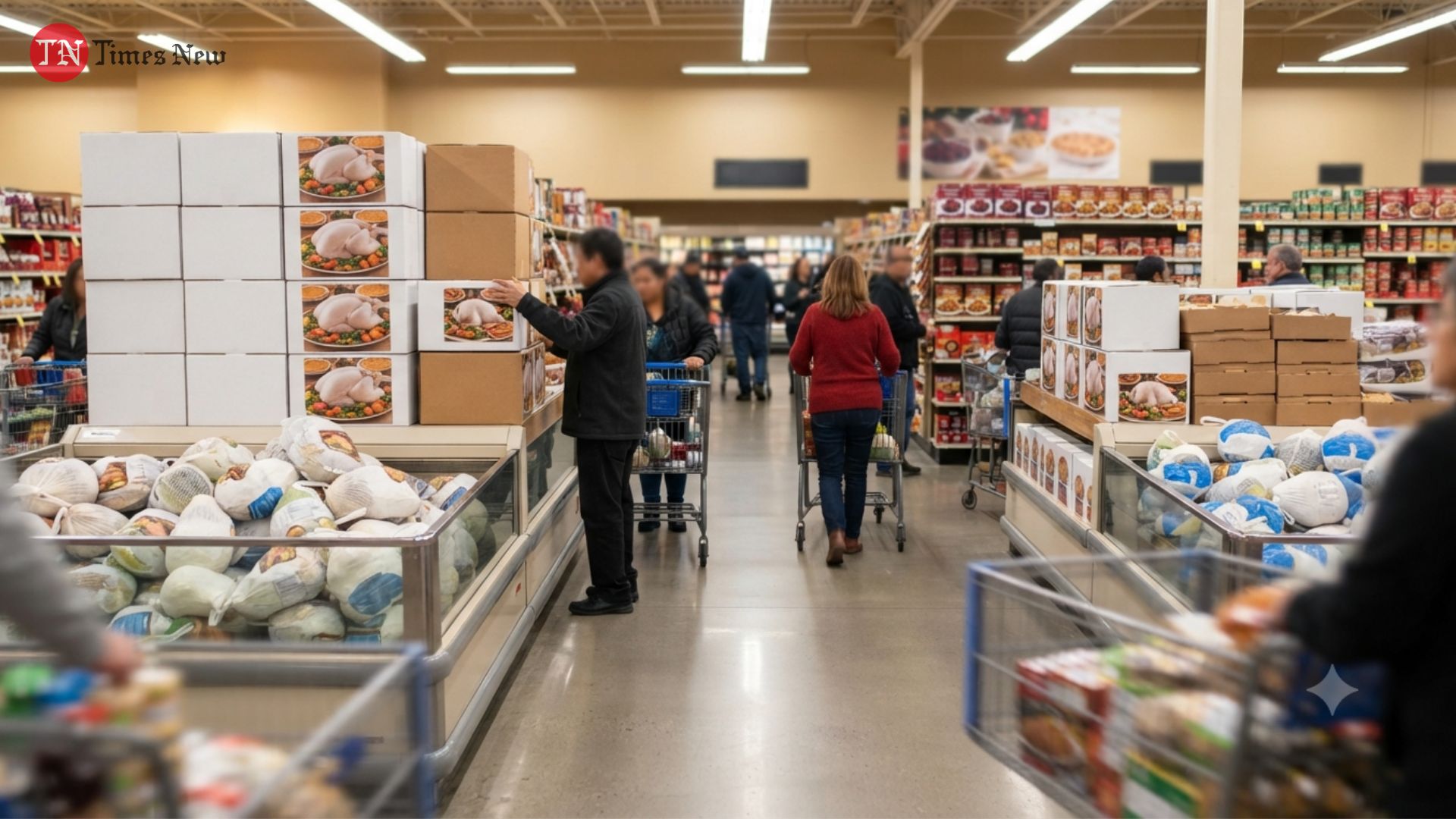
Major U.S. retailers are aggressively discounting Thanksgiving meal bundles this holiday season, absorbing rising wholesale costs in a bid to win over inflation-weary consumers. Although wholesale prices for frozen turkeys and russet potatoes surged by 12% and 46% respectively, retail giants like Walmart and Lidl are using deep discounts as a “loss-leading” strategy to draw foot traffic. Walmart unveiled a 26-item meal kit for 10 people at $35—$5 cheaper than last year’s offering—while German discounter Lidl lowered its 29-item bundle to $33.56, vowing not to be undercut by its rival.
To offset the profit-margin squeeze from these discounted staples, grocers are relying on higher-margin impulse buys—such as desserts, snacks, and beverages—once shoppers are inside the store. Retailers are also leveraging their purchasing power to negotiate supplier discounts and bundling items with falling wholesale prices, such as ham, to balance out the cost of pricier ingredients. Meanwhile, low-cost competitor Aldi took a different approach to keeping prices down, offering a $39 meal for 10 that trims the item count from 26 to 15 and omits russet potatoes altogether.
The fierce price war comes as affordability remains a top concern for American households, with the American Farm Bureau Federation pegging the average cost of a 10-person Thanksgiving dinner at $58.63, up 6% from last year. While Wells Fargo estimates the typical holiday spread could run as high as $79, value-focused grocers are positioning their sub-$40 bundles as a vital lifeline for budget-conscious families. However, industry analysts caution that retailers must maintain product quality during this race to the bottom, noting that while shoppers welcome budget trade-offs, they will quickly reject perceived “rip-offs.”
Pic Courtesy: google/ images are subject to copyright
You May Also Like


Recent Post
- AI-Fueled Cyber Threats Target Underinsured Retailers Ahead of Black Friday

- Grocers Slash Thanksgiving Meal Prices to Woo Inflation-Weary Shoppers Despite Wholesale Spike

- Polestar’s Third-Quarter Loss Widens to $403 Million as Revenue Falls 14%

- US Proposes New Tariffs on 14 Trading Partners, China Faces Highest Rates