


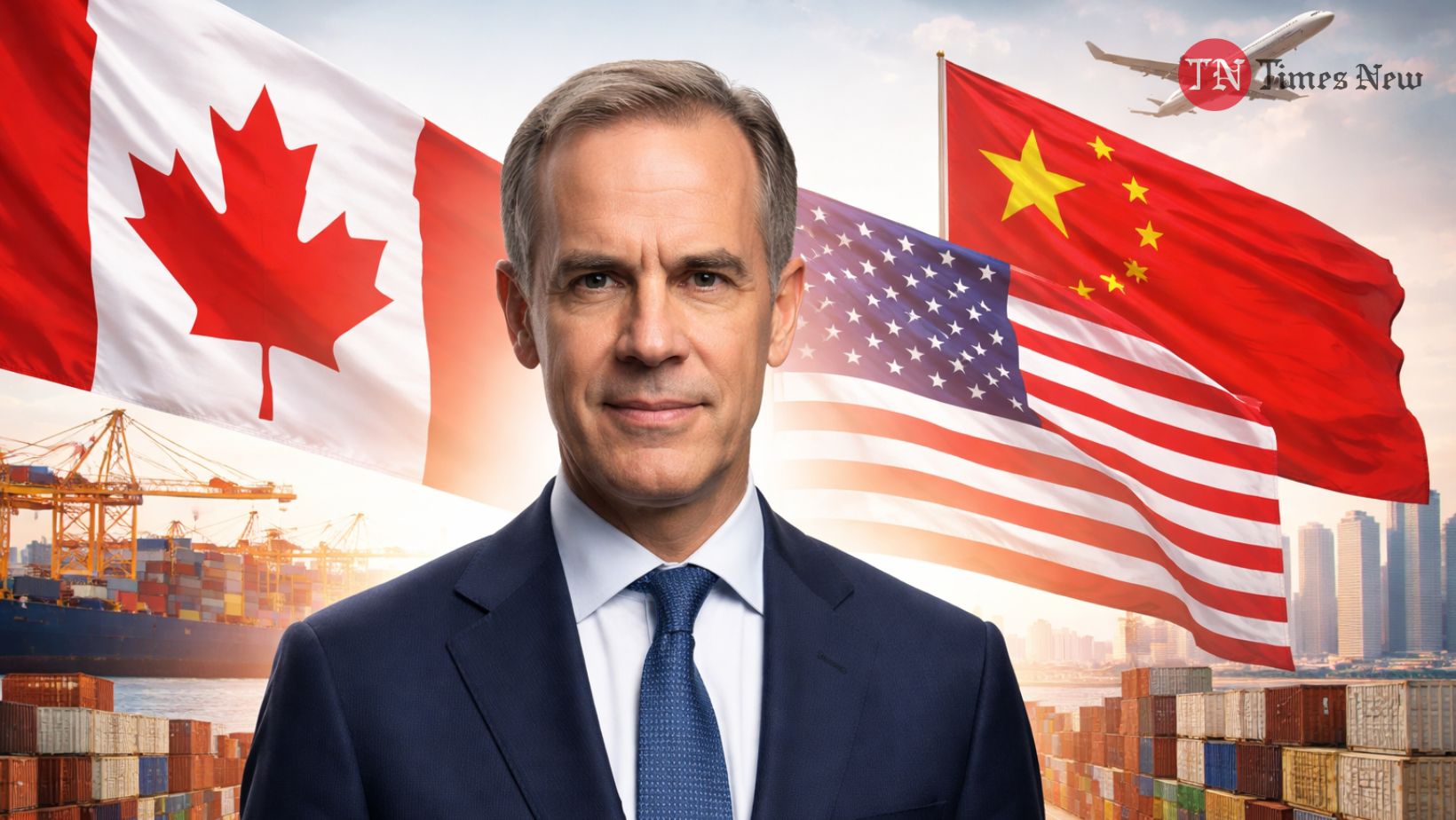
Canadian Prime Minister Mark Carney is accelerating efforts to diversify Canada’s trade ties, pursuing closer cooperation with China and expanding a network of smaller trade deals as U.S. President Donald Trump’s tariff-driven policies disrupt long-standing global alliances. Carney, a former head of the Bank of Canada and Bank of England, said Canada will champion “plurilateral” agreements among smaller groups of countries, positioning itself as a bridge between the European Union and Pacific Rim nations. Speaking during a stop in Doha ahead of the Davos gathering, Carney said global multilateral institutions are weakening, calling for fresh economic partnerships to stabilize international trade.
Despite this push, analysts say Canada remains heavily constrained by its economic dependency on the United States, which still buys nearly 70% of Canadian exports. Export Development Canada estimates that cutting reliance on the U.S. even by 10% would require Canada to dramatically increase exports to several major markets, including China, Germany, France, Mexico, Italy, India — or similar economies. Carney has pledged to double Canada’s non-U.S. exports over the next decade, but experts warn that a deeper shift toward China may bring long-term risks, including the possibility of Chinese manufacturers flooding the Canadian market across multiple product categories.
Carney recently became the first Canadian prime minister to visit Qatar and the first to travel to China since 2017, describing Beijing as a more predictable partner than Washington. He is also expected to visit India after diplomatic ties were restored and trade talks resumed. Canada has concluded trade deals with Ecuador and Indonesia, signed investment agreements with the UAE, and plans next to focus on expanding ties with the Philippines, Thailand, Mercosur, Saudi Arabia, and India. However, economists note that U.S. dominance in Canadian trade—especially in energy, where around 90% of Canadian crude goes to the U.S.—is unlikely to decline sharply in the near term, with many businesses waiting for the outcome of U.S.-Mexico-Canada trade agreement negotiations this year.
Pic Courtesy: google/ images are subject to copyright
You May Also Like


Recent Post
- Trump Threatens 200% Tariffs on French Wine to Pressure Macron Over ‘Board of Peace’

- Carney Pushes Canada Toward New Global Trade Order, Eyes China and Smaller Alliances

- Lavrov Says Russia Expects U.S. to Free Crew of Seized Venezuela-Linked Tanker

- U.S. Supreme Court to Hear Case Testing Federal Reserve Independence After Trump Move to Fire Governor Lisa Cook