

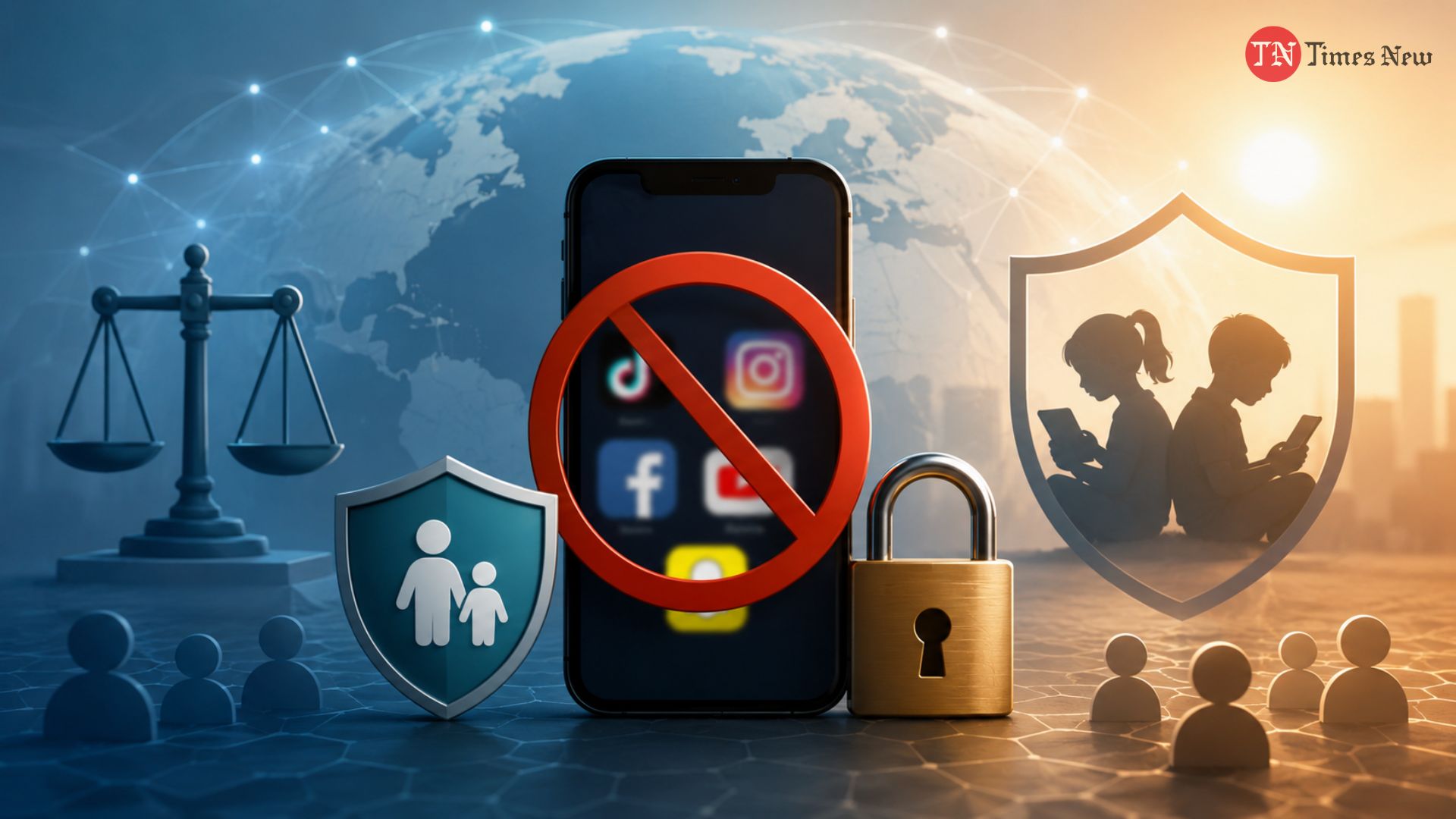
Governments across the world are moving aggressively to regulate children’s access to social media platforms, citing rising concerns over mental health, online addiction, cyberbullying, and harmful digital content. Leading the global push, the country Australia became the first nation to impose a nationwide ban on social media use for children under 16, targeting platforms such as TikTok, Meta’s Facebook and Instagram, and Alphabet’s YouTube. The law, set to take effect from December 10, 2025, threatens tech companies with fines of up to A$49.5 million for non-compliance.
Several countries are now considering or implementing similar measures. Britain is examining an Australia-style ban alongside stricter AI chatbot safety rules for minors, while France, Denmark, Greece, Poland, Slovenia, and Spain are advancing restrictions for users under 15 or 16. In China, regulators have introduced a “minor mode” system that limits screen time through device-level controls, while countries such as Germany and Italy currently require parental consent for younger users. Malaysia has also announced plans to prohibit social media use for children under 16 beginning in 2026.
The debate is also intensifying in the United States and the European Union. U.S. lawmakers recently revived momentum behind the Kids Online Safety Act, which would require platforms to take stronger steps to protect minors online. Meanwhile, European Commission President Ursula von der Leyen signaled support for tougher digital protections, including possible age restrictions for platforms like TikTok, Meta, and X. Despite tech companies maintaining a minimum sign-up age of 13, child safety advocates argue enforcement remains weak, with millions of underage users still accessing social media globally.
Pic Courtesy: google/ images are subject to copyright