


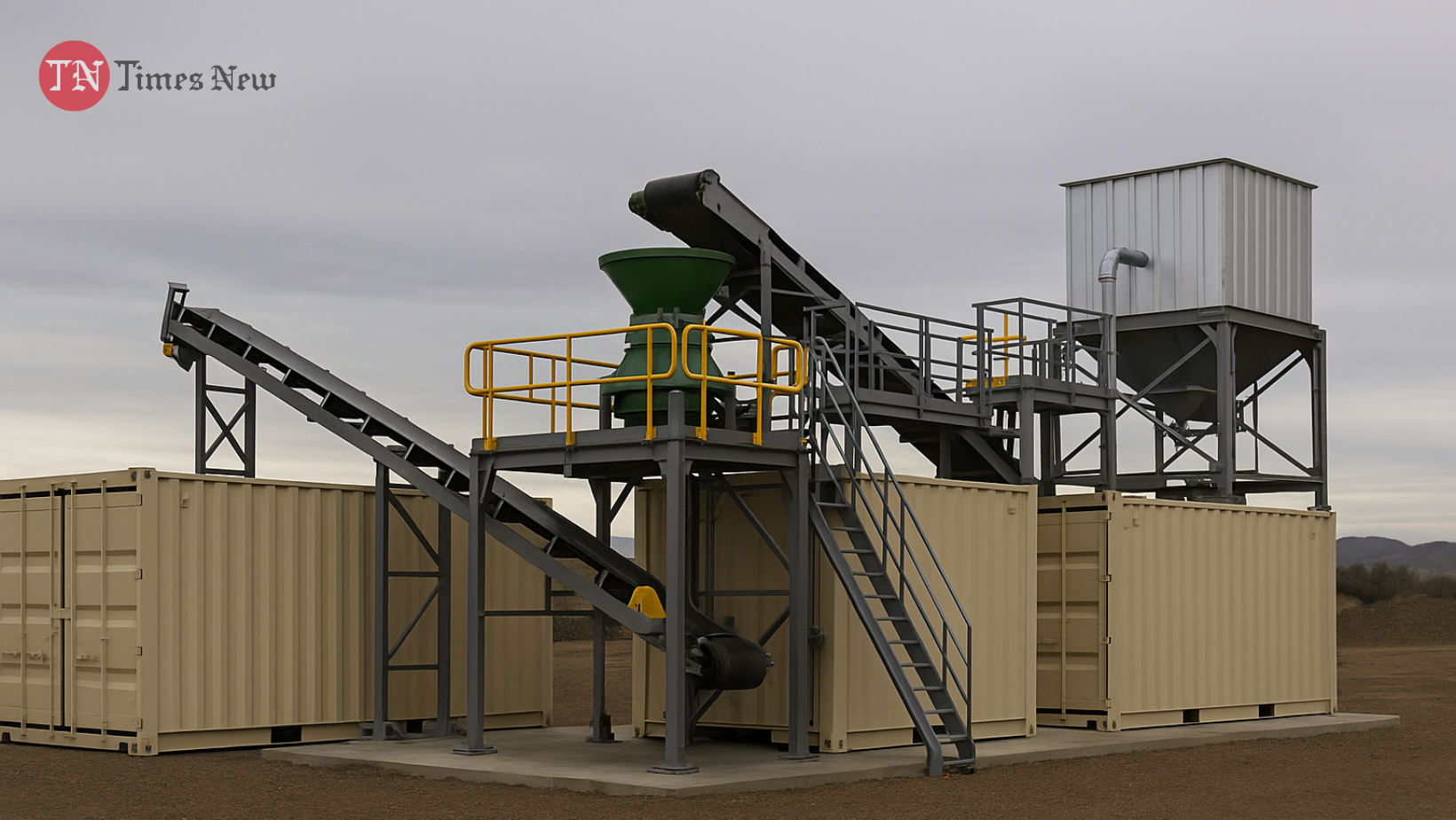
The U.S. military is developing a fleet of small, portable refineries to produce critical minerals needed for bullets, armor, and other weaponry—an effort aimed at reducing reliance on Chinese-controlled supply chains. The initiative, led by the U.S. Army in partnership with the Idaho National Laboratory (INL) and Perpetua Resources, will begin with antimony, a mineral essential for producing bullet primers. The Army has invested $30 million in the program, which includes a refinery designed by Westpro Machinery that fits into four shipping containers and can produce 7 to 10 metric tons of antimony trisulfide annually.
The portable refinery model is intended to provide a secure domestic supply of niche minerals without depending on large commercial refineries that typically focus on bulk materials such as copper and iron ore. If the pilot succeeds, the U.S. aims to expand the strategy to include other critical minerals like tungsten, rare earths, and boron. INL will oversee testing over the next six months to ensure the facility meets efficiency and environmental standards. Antimony trisulfide production has not occurred in the U.S. since the 1960s, and the 2021 halt of shipments from China highlighted vulnerabilities in the military’s supply chain.
Officials say additional mini-refineries could be deployed during conflict scenarios to increase processing capacity, with the potential to place future units on military bases or other federal properties. Perpetua Resources, whose Idaho mine would supply ore for scaling up, views the initiative as a step toward strengthening U.S. mineral independence. As Army adviser Mark Mezger emphasized, secure access to materials like antimony is vital to maintaining national defense readiness: “Without antimony trisulfide, you can’t make primers—and without primers, you can’t make bullets.”
Pic Courtesy: google/ images are subject to copyright
You May Also Like


Recent Post
- U.S. Lawmakers to Vote Again on DHS Funding as Shutdown Continues Amid Iran War Tensions

- Texas Rep. Tony Gonzales Admits Relationship With Former Staffer Amid Ethics Probe

- Pakistani Businessman Testifies in U.S. Court Over Alleged Iran-Linked Assassination Plot

- Dr. Vijaya Mohan: Driven by Purpose, Defined by Care