


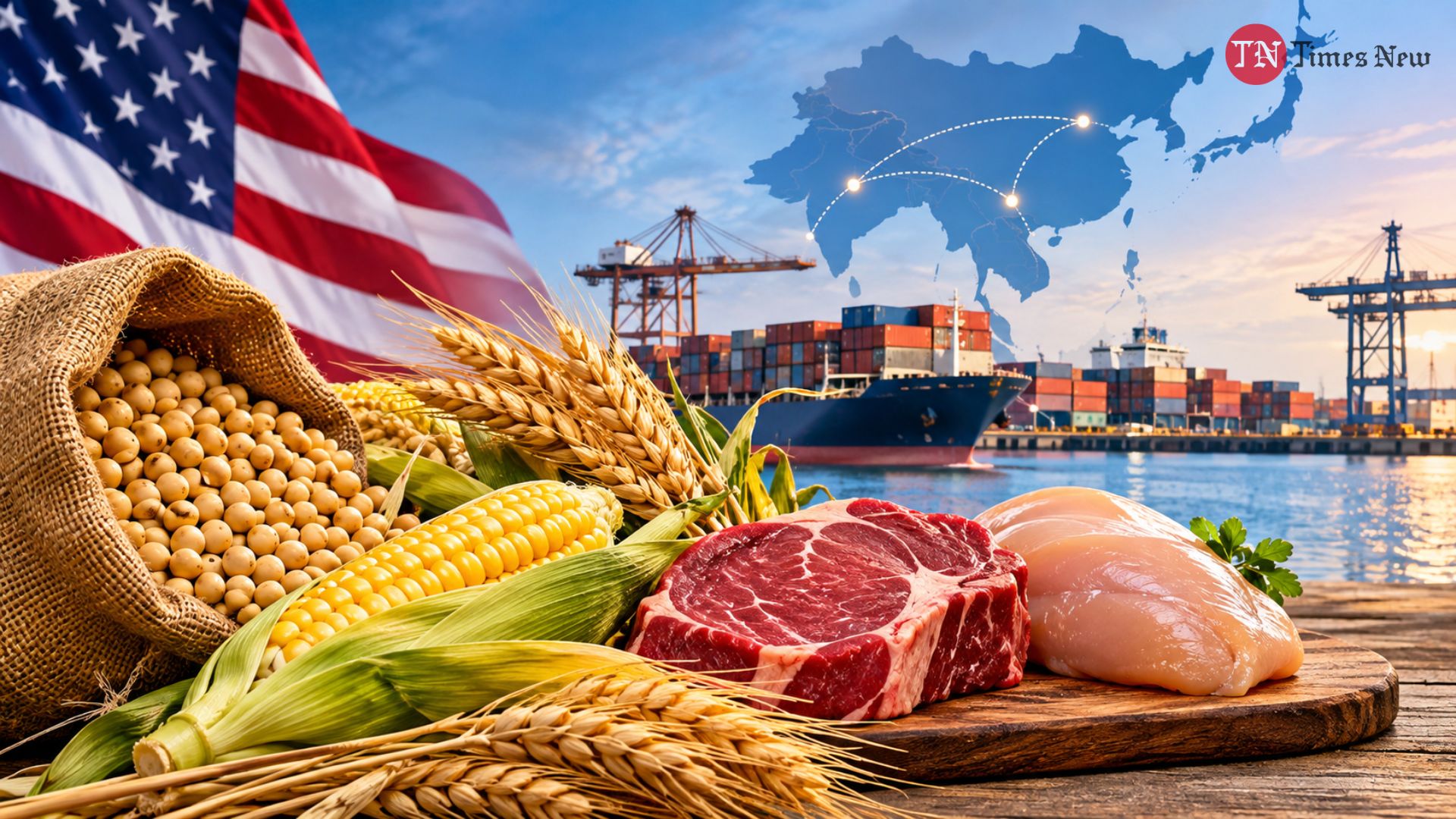
US President Donald Trump has touted a series of agricultural trade victories during his Asia visit, claiming his tariff-driven trade strategy is boosting American farmers. However, a Reuters analysis of 10 trade agreements found that several deals have failed to deliver the promised surge in US agricultural exports. While some agreements initially lifted crop and livestock shipments, exports to partner countries often slowed afterwards, raising questions about the effectiveness of Trump’s trade policies.
China, the largest US agricultural trading partner in Asia, is expected to meet its commitment to purchase 25 million metric tons of American soybeans in 2026. However, purchases remain below pre-tariff levels, while Beijing’s commitment to buy $17 billion worth of other US agricultural products remains largely unfulfilled. Similar gaps have emerged in Indonesia, Malaysia and Bangladesh, where agricultural imports have fallen short of agreed targets. Indonesia, for instance, had purchased less than $2.4 billion of the $4.5 billion in agricultural products it agreed to import, while US pork exports to Malaysia declined by 52% through September 2026.
The shortfall has raised concerns about the broader impact of Trump’s tariff strategy on American farmers and the country’s global trading relationships. Analysts say the aggressive trade approach has weakened confidence in the US as a reliable trading partner, encouraging traditional buyers to explore alternative suppliers. Although the White House maintains that its agreements are delivering progress, trade experts argue that many commitments remain unfulfilled. The developments also come amid growing dissatisfaction among farmers over the administration’s policies, which contributed to Republican losses in recent midterm elections.
Pic Courtesy: google/ images are subject to copyright
You May Also Like



Recent Post
- Alphabet Raises $4.19 Billion Through Canadian Bond Offering to Fund Corporate Needs

- Mercedes-Benz Secures First German Approval for Advanced Driving Tech

- Trump’s Asian Trade Deals Fall Short of Promised US Agricultural Export Gains
- US Democrats Probe Nvidia’s Influence in Megaspeed Chip Diversion Investigation
