


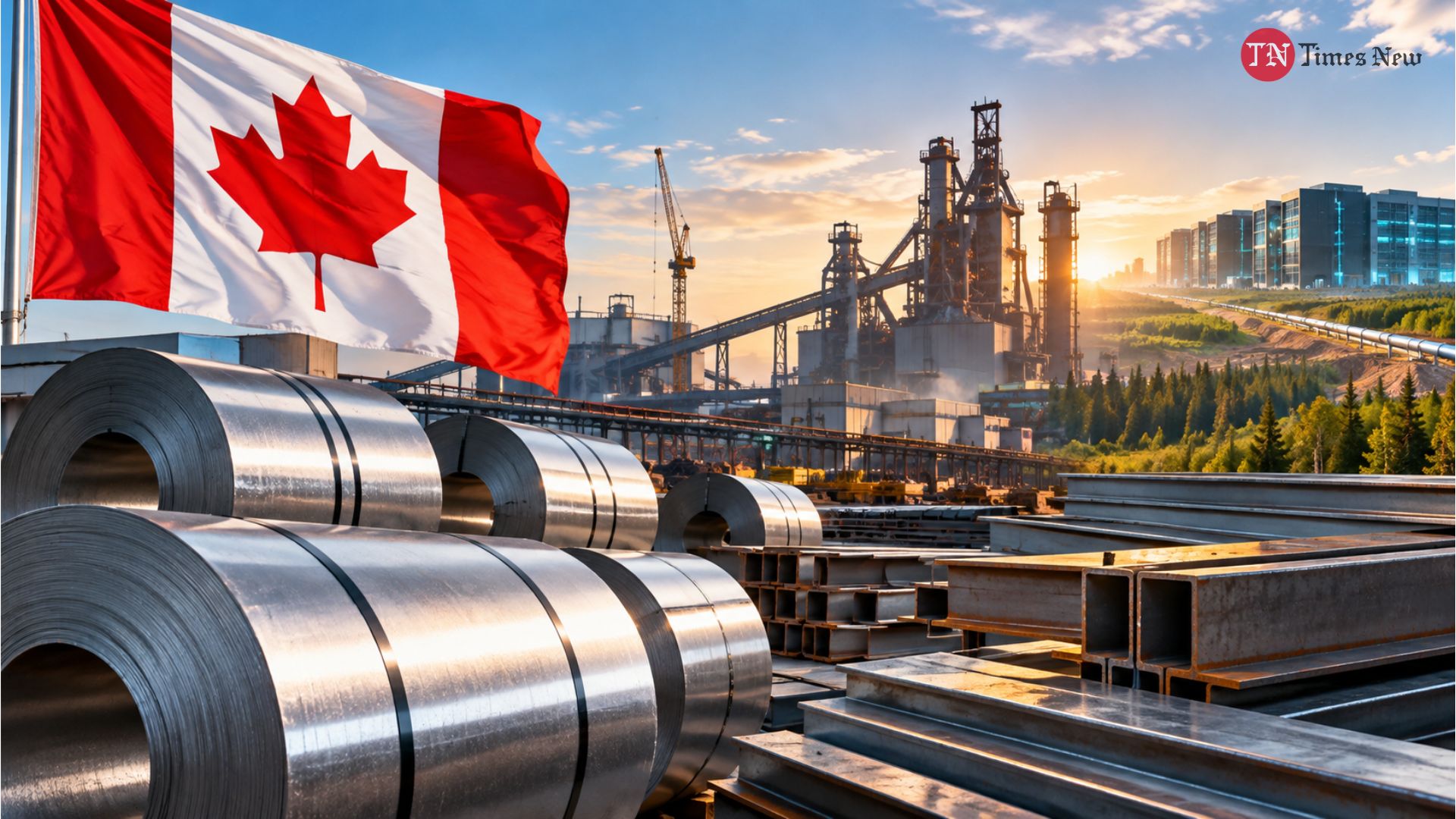
Canada’s steel industry is showing signs of recovery after being hit hard by US President Donald Trump’s tariffs, supported by rising domestic demand, major infrastructure projects and government assistance. Since the US raised tariffs on imported steel from 25% to 50% in June 2025, Canadian steelmakers have increasingly shifted their focus towards domestic customers. According to the Canadian Steel Producers Association, steel exports to the US plunged 60% in 2025, while the share of steel consumed in Canada that was produced domestically increased to 51%, up from 41% in 2024. However, the industry has suffered significant job losses, particularly at major producers.
The recovery is gaining momentum mainly in western Canada, where mining, energy, construction and artificial intelligence data centre projects are generating fresh demand. A proposed oil pipeline to the Pacific Coast is also expected to support steel consumption. The government has announced C$1 billion in loans for the steel, aluminium and copper industries and extended restrictions on foreign steel imports to protect domestic producers from cheaper overseas supplies. Companies are also investing in local production, with Tenaris committing C$306 million to expand its Canadian manufacturing capacity for the oil and gas sector. Meanwhile, steelmaker Algoma has highlighted growing demand from infrastructure, construction and defence projects despite its earlier announcement of 1,000 job cuts.
Canadian officials and industry representatives believe the shift towards domestic production could strengthen the sector, although challenges remain due to global oversupply and competition from lower-cost producers in China and South Korea. The government’s Buy Canadian policy is expected to encourage the use of locally produced steel in infrastructure projects, while industry unions are calling for tighter import quotas and stronger trade protections. Prime Minister Mark Carney’s efforts to reduce Canada’s economic dependence on the US appear to be gaining some traction in the steel sector, but industry leaders warn that a broader revival will require sustained investment, stronger domestic demand and continued government support.
Pic Courtesy: google/ images are subject to copyright