

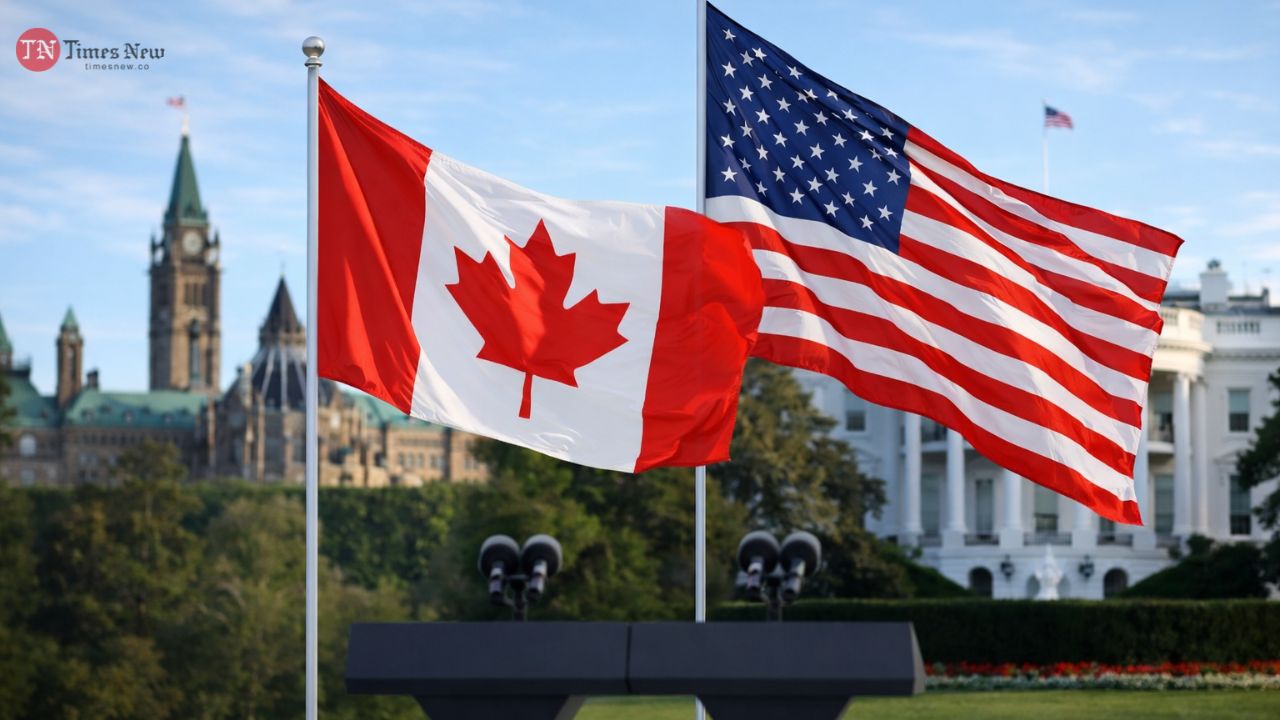
Canada responded cautiously after the US Supreme Court struck down former President Donald Trump’s global tariffs, including the so-called “fentanyl” levies imposed on Canada, China and Mexico. Trade Minister Dominic LeBlanc said the ruling reinforced Ottawa’s long-held view that the tariffs were unjustified, but emphasized that significant challenges remain. Duties on steel, aluminium and automobiles are still in place, and a new 10% global tariff announced by Washington will take effect soon, though USMCA exemptions are expected to continue.
The practical impact of the ruling on Canada is limited, as around 85% of trade covered by the fentanyl tariffs was already exempt under the United States–Mexico–Canada Agreement (USMCA). Attention is now shifting to the upcoming review of the trade pact, which governs a market of more than 500 million people. Canada and Mexico have both expressed commitment to maintaining a trilateral agreement, while US officials have signaled a preference for separate bilateral deals.
Formal trade discussions between Ottawa and Washington are expected to resume in the coming weeks, with a key deadline set for 1 July. Tensions persist over issues such as dairy import rules, alcohol sales restrictions, and Canada’s Online Streaming Act, which requires foreign media companies to support Canadian content. As uncertainty continues, Canadian business leaders are calling for a stable, rules-based renewal of the USMCA to avoid further disruptions, while Canada also works to expand trade beyond the US, its largest export market.
Pic courtesy: google/ images are subject to copyright
You May Also Like


White House Pushes Iran Amid Military Build-Up
19 February 2026

US Congressman Faces Backlash Over Anti-Muslim Remarks
18 February 2026