


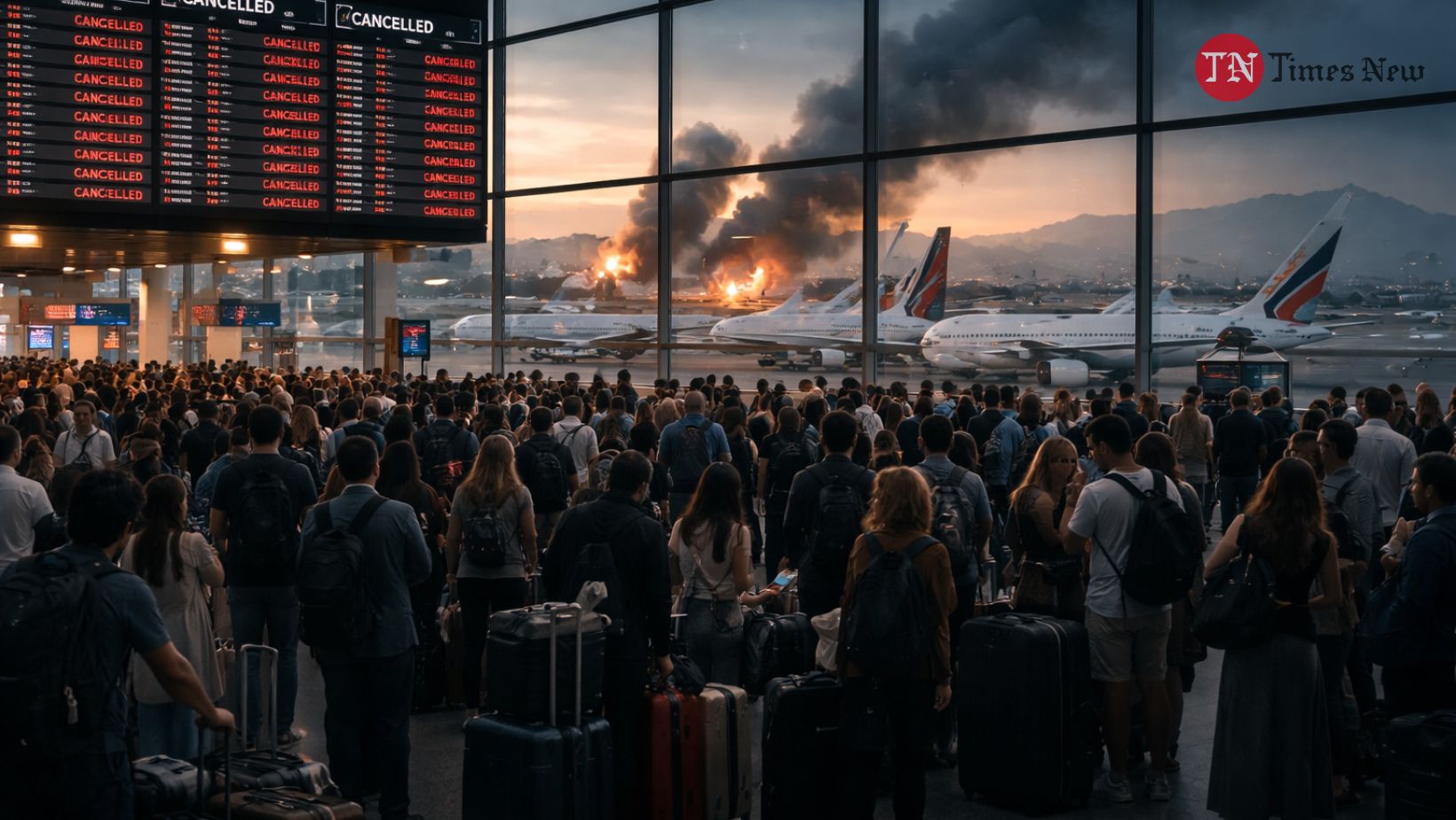
Escalating U.S.-Israeli strikes on Iran and Tehran’s retaliatory attacks have severely disrupted air travel across the Middle East, forcing multiple countries to close their airspace. According to flight tracker FlightAware, more than 2,400 flights were canceled on Sunday alone. Major aviation hubs including Dubai and Abu Dhabi in the United Arab Emirates, Doha in Qatar, and Manama in Bahrain were among those affected. Emirates suspended all flights to and from Dubai until at least Sunday afternoon, while Qatar’s main airport remained closed until Monday morning. Israeli airspace also stayed shut, with national carrier El Al preparing recovery plans to repatriate stranded citizens once conditions permit.
International carriers swiftly adjusted operations as the crisis deepened. United Airlines canceled all flights between the United States and Tel Aviv through March 6, along with services to Dubai through March 4, citing regional airspace closures. Aviation analysts estimate that Gulf carriers such as Emirates, Qatar Airways, and Etihad typically handle about 90,000 passengers daily through their hubs, underscoring the scale of disruption. Experts warned that rerouting flights around conflict zones—often via southern paths over Saudi Arabia—will extend travel times, increase fuel consumption, and potentially drive up ticket prices if the situation persists.
Aviation officials suggested that partial reopening of airspace could occur once military authorities provide clearer guidance on safe corridors and the extent of missile threats. However, the situation remains fluid, with airlines urging passengers to check flight status updates before heading to airports. Many carriers have issued travel waivers allowing affected passengers to rebook without additional fees. Industry observers say delays and cancellations are likely to continue in the coming days as regional tensions evolve and safety assessments are updated.
Pic Courtesy: google/ images are subject to copyright