


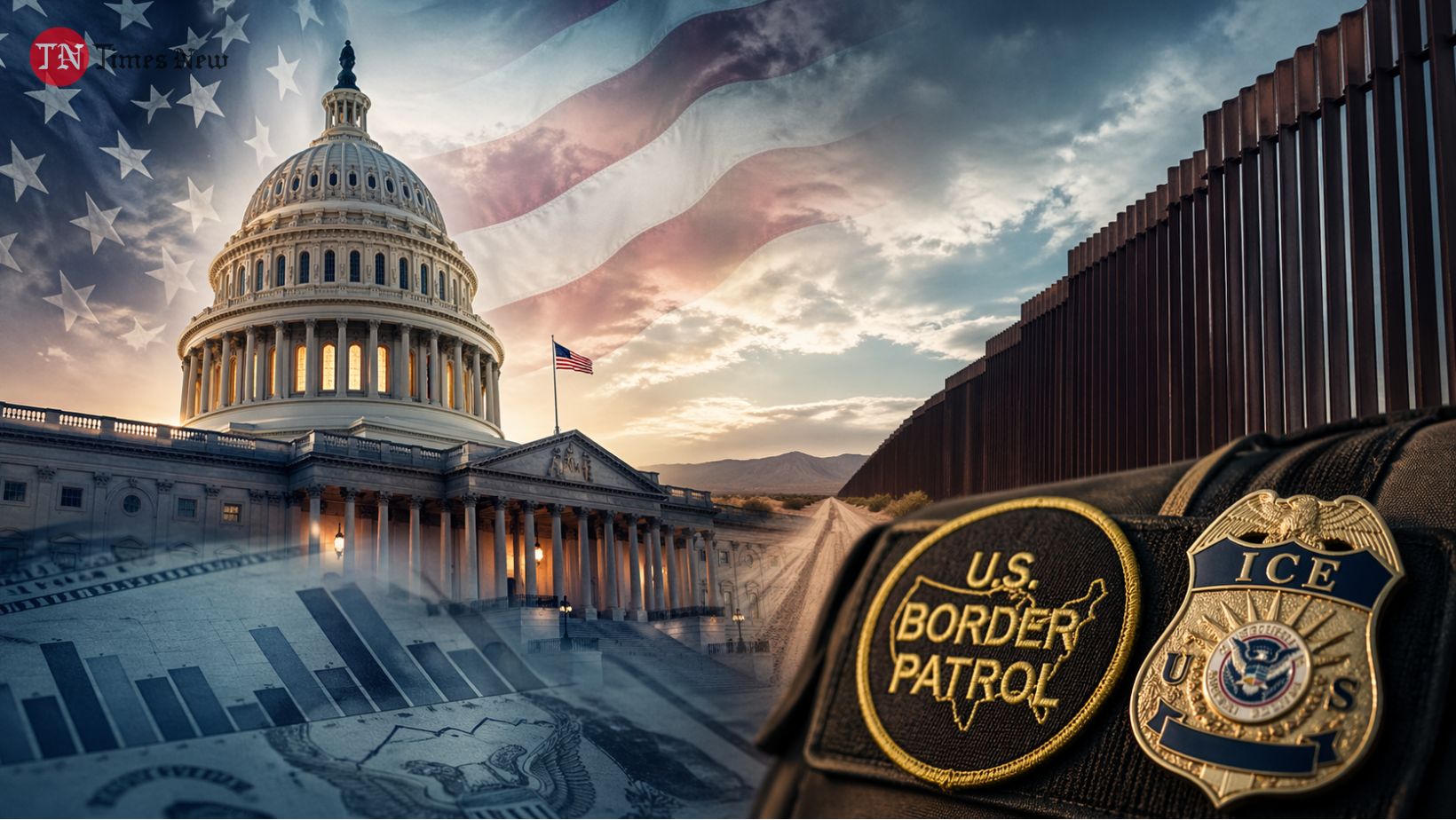
U.S. Senate Republicans on Thursday moved forward with a $70 billion funding plan for Immigration and Customs Enforcement (ICE) and Border Patrol, approving a non-binding budget resolution in a narrow 50-48 vote. The measure, opposed by all Democrats and two Republicans, now heads to the House of Representatives as lawmakers attempt to resolve a partial shutdown affecting the Department of Homeland Security (DHS) since mid-February. The proposed funding would cover operations for the next three years, potentially extending through President Donald Trump’s term ending in January 2029.
The plan has sparked sharp partisan divisions, with Democrats demanding stricter oversight and operational guardrails for immigration enforcement agencies following recent fatal shootings involving U.S. citizens. Calls for requiring judicial warrants before entering private homes and aligning enforcement protocols with standard policing practices were rejected after weeks of stalled negotiations. Republicans, however, defended the funding as essential for border security and signaled plans to pass detailed legislation through budget reconciliation, allowing approval with a simple majority in the Senate.
The vote followed a nearly six-hour “vote-a-rama” session, during which Democrats introduced multiple amendments addressing healthcare costs, food assistance, and consumer protections—all of which failed. A bipartisan amendment led by Senator Lindsey Graham to create a deficit-neutral fund for deporting immigrants convicted of serious crimes passed unanimously. As midterm elections approach, the debate highlights broader political tensions over immigration policy, economic concerns, and voter priorities, with recent polling indicating public unease over both deportation strategies and rising living costs.
Pic Courtesy: google/ images are subject to copyright
You May Also Like


Bamboo Insurance Targets Up to $3.24 Billion Valuation in U.S. IPO
14 September 2026

Kaiko Raises $110 Million in Funding Round Led by S&P Global
14 September 2026