
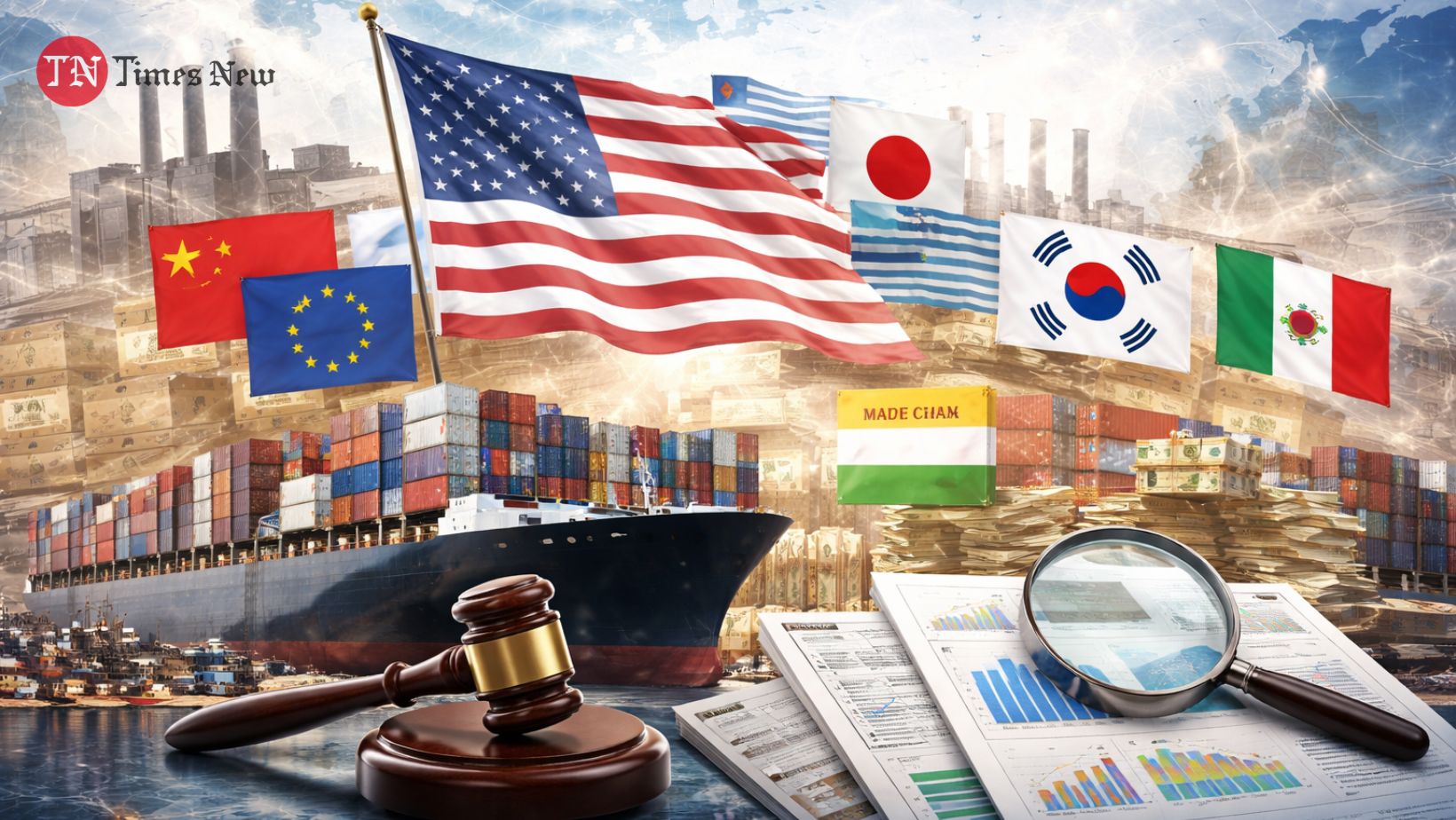
The administration of U.S. President Donald Trump has launched two new trade investigations targeting excess industrial capacity among major trading partners and the use of forced labor in global supply chains. Announced on Wednesday by U.S. Trade Representative Jamieson Greer, the move signals renewed tariff pressure after the U.S. Supreme Court last month struck down much of the administration’s earlier tariff framework. Countries that could face new tariffs by summer include China, the European Union, India, Japan, South Korea and Mexico, as Washington seeks to address what it calls unfair trade practices and structural overproduction in key manufacturing sectors.
The excess-capacity investigation, conducted under Section 301 of the Trade Act of 1974, also covers Taiwan, Vietnam, Thailand, Malaysia, Cambodia, Singapore, Indonesia, Bangladesh, Switzerland and Norway, though Canada was notably excluded. U.S. officials said the probe will examine persistent trade surpluses and underutilized industrial capacity, particularly in sectors such as automotive manufacturing. China rejected the allegations, calling claims of overcapacity a “false proposition” and accusing Washington of political manipulation. Meanwhile, European Union officials expressed concern about potential tariff increases despite a previously negotiated framework that set a broad 15% U.S. levy.
In addition to the capacity probe, Washington plans to launch another Section 301 investigation focusing on imports produced with forced labor, potentially covering shipments from more than 60 countries. The initiative expands efforts already in place under the Uyghur Forced Labor Prevention Act, which restricts imports linked to China’s Xinjiang region. U.S. officials aim to conclude the investigations and determine possible remedies before temporary tariffs introduced in February expire in July, while diplomatic engagement continues ahead of a potential meeting between Trump and Chinese President Xi Jinping later this month.
Pic Courtesy: google/ images are subject to copyright