


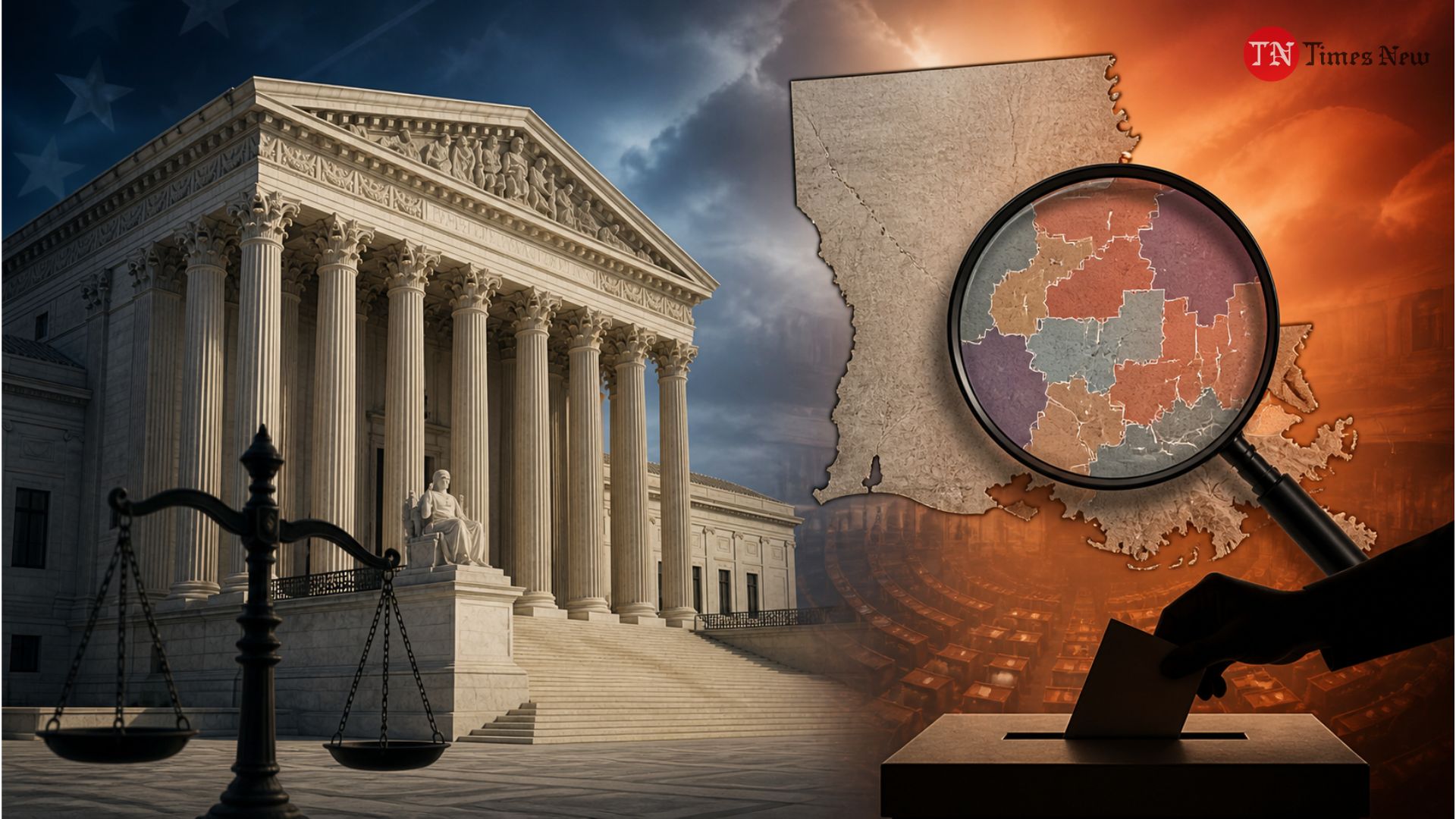
The U.S. Supreme Court has allowed its recent landmark ruling in Louisiana v. Callais to take immediate effect, accelerating changes to Louisiana’s congressional map ahead of upcoming elections. In a 6–3 decision, the court declared the state’s current map—featuring two majority-Black districts held by Democrats—unconstitutional, prompting Republican state officials to suspend scheduled House primaries and begin redrawing district boundaries. The move came after challengers urged the court to bypass its usual 32-day delay, citing the urgency of election timelines.
The decision triggered a sharp exchange between justices, with Ketanji Brown Jackson criticizing the expedited order as “unwarranted and unwise,” warning it risks appearing partisan and contributes to election-related “chaos.” She argued the court should adhere to its standard procedures to avoid вмешling close to an election. In contrast, Samuel Alito, joined by Clarence Thomas and Neil Gorsuch, defended the decision, dismissing Jackson’s concerns as “baseless” and asserting that delaying enforcement would effectively preserve an unconstitutional map.
The broader ruling significantly narrows the scope of Voting Rights Act of 1965, requiring plaintiffs to show clear intent of racial discrimination in districting—raising the bar for future challenges. Critics, including Elena Kagan and Sonia Sotomayor, warned the decision could weaken protections against racial vote dilution. The ruling’s impact may extend beyond Louisiana, as states like Tennessee and Alabama pursue similar redistricting efforts that could reshape the political landscape.
Pic Courtesy: google/ images are subject to copyright
You May Also Like

Gopu Nandilath: Four Decades of Vision, Growth and Trust
14 August 2026

Databricks Raises $5 Billion at $190 Billion Valuation
13 August 2026

EU Uncertainty Delays Uranium Enrichment Investment
13 August 2026