

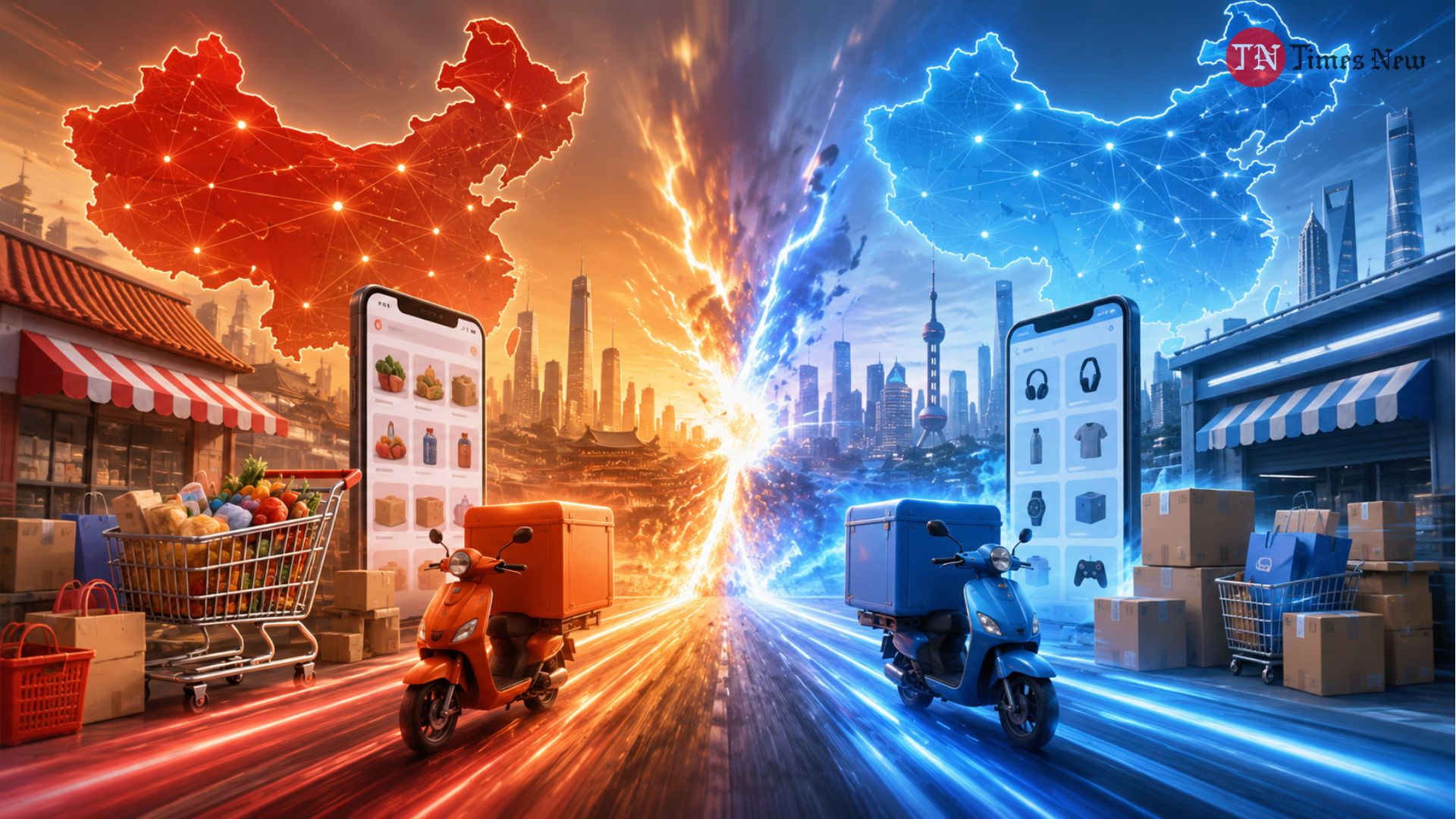
China’s fierce meal-delivery subsidy war may be losing steam, but it has permanently changed consumer expectations. After a year of heavy spending by Meituan, Alibaba and JD.com on discounts, free delivery and merchant incentives, Chinese shoppers are increasingly accustomed to receiving groceries, cosmetics, medicine, flowers and even electronics within an hour of placing an order. The instant-retail market is expected to reach 1.2 trillion yuan ($178 billion) by the end of 2026 and grow at an average annual rate of 12.6% through 2030.
The platforms are now trying to turn the millions of users attracted by cheap meal deliveries into customers for higher-margin products. Analysts say instant retail could increasingly take business away from traditional shopping channels as consumers embrace the convenience of buying something the moment they think of it. The competition remains costly, however, with the government stepping in to curb aggressive practices and protect merchants, consumers and couriers. The subsidy battle also hurt some businesses, including Luckin Coffee, whose same-store sales at self-operated outlets fell 5.3% in the April-June period after a subsidy-fuelled comparison base the previous year.
The next phase is shifting away from simply offering discounts and toward building the infrastructure needed for profitable rapid delivery. Alibaba’s instant-retail revenue rose 45% year-on-year to 53.3 billion yuan in the second quarter, while JD.com said losses in the segment narrowed and Meituan returned to overall profit as subsidy spending eased. Meituan, Alibaba and JD.com are investing in supermarkets, dark stores and high-speed fulfilment warehouses in densely populated areas. The battle is therefore evolving from a race for subsidised orders into a fight to control China’s increasingly important one-hour shopping ecosystem.
Pic Courtesy: google/ images are subject to copyright