


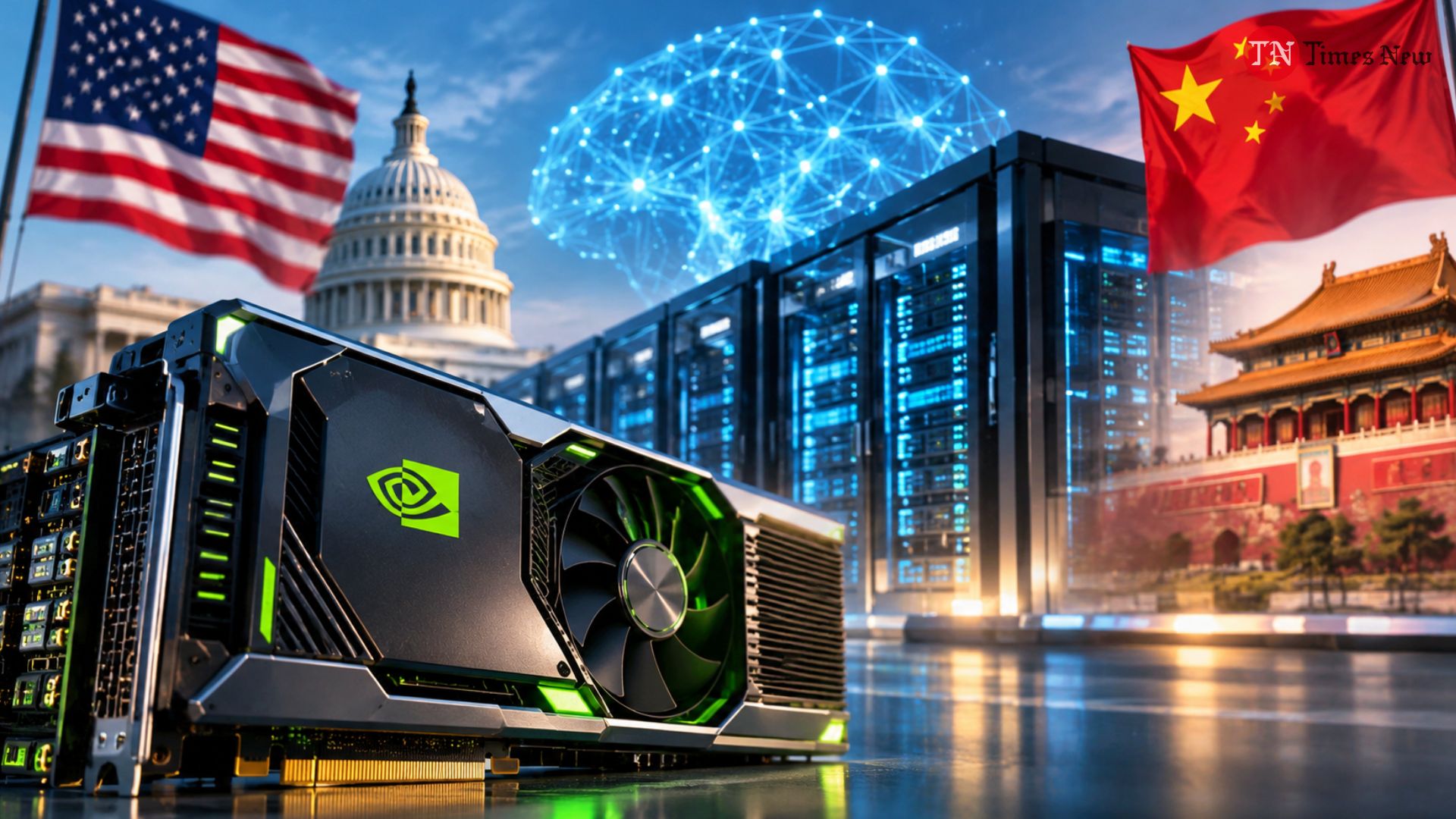
A Reuters investigation has identified more than $3 billion worth of Chinese artificial intelligence (AI) data-centre projects built around Nvidia processors restricted by US export controls, despite the company’s claims that it has effectively lost access to China’s AI computing market. Based on a review of more than 150 procurement notices, investment plans, construction contracts and corporate disclosures, the investigation found projects and equipment agreements worth over 23 billion yuan ($3.2 billion), spanning major technology hubs, universities, local government-backed ventures and regional computing centres. The estimate includes planned investments, signed contracts and completed installations, covering infrastructure costs in addition to chip purchases.
The findings highlight the continued demand for Nvidia’s H100, H200 and H800 processors in China, even as Washington tightens restrictions on advanced semiconductor exports. Several projects are already operational or under construction, while others face potential delays, supply disruptions and expensive redesigns to accommodate domestic alternatives. Although Nvidia CEO Jensen Huang had previously said the company’s Chinese market share had fallen from 95% to zero, an IDC report cited by Reuters estimated that Nvidia accounted for 34% of China’s AI accelerator shipments in the first half of 2026. Analysts have called for greater scrutiny of the ultimate users of computing power rather than focusing solely on the companies purchasing the chips.
The developments come amid heightened scrutiny following Huang’s resignation as CEO on November 12, 2026, after allegations surrounding his relationship with Chinese businesswoman Alice Huang, who is suspected by US authorities of having intelligence ties to Beijing. Nvidia’s board has launched an independent investigation, while cloud partner Megaspeed has denied illegally diverting Nvidia processors to China. The company has stated that there is no reason to believe its trade secrets or US national security were compromised, and no public finding has established that Jensen Huang violated export-control laws. The Chinese projects identified in the Reuters investigation have not been linked to Megaspeed or the allegations surrounding Huang.
Pic Courtesy: google/ images are subject to copyright
You May Also Like



Recent Post
- Paris Judge Orders Cognitive Assessment of Hermès Heir in Missing $9 Billion Fortune Case

- US Banks Collect $1.6 Billion in Overdraft Fees, Highest in Four Years

- Reuters Review Finds Over $3 Billion in Chinese AI Projects Relying on Restricted Nvidia Chips
- Amazon Plans to Build a Global Product Database to Dominate AI-Powered Shopping