


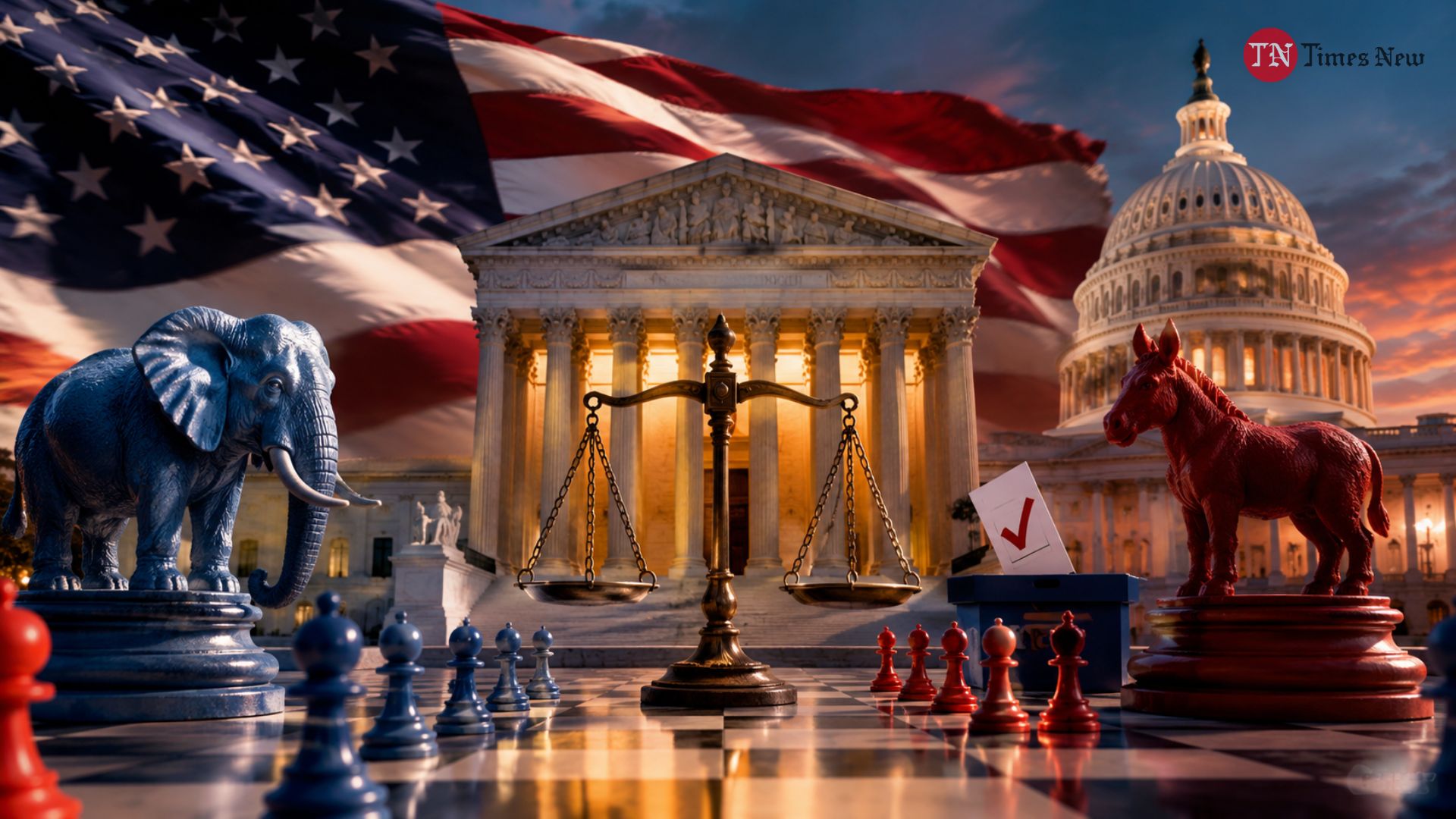
A recent U.S. Supreme Court ruling eliminating limits on coordinated campaign spending between political candidates and national party committees is expected to significantly alter the financial dynamics of the upcoming Senate elections. The decision allows parties such as the Republican National Committee (RNC) and the Democratic National Committee (DNC) to spend unlimited funds in coordination with candidates, potentially reducing the fundraising advantage held by several Democratic contenders.
The ruling comes despite strong fundraising performances by Democratic candidates, including Georgia Senator Jon Ossoff, who has raised more than $81 million and holds nearly $33 million in campaign funds. Similar financial advantages are seen in key battleground states such as North Carolina, Ohio, and Texas. However, Republican candidates may now receive substantial financial support from their national party committees, helping offset fundraising deficits in closely contested races.
Republicans currently hold a 53-47 majority in the Senate, while Democrats must gain four seats to regain control in the November elections. Democrats are defending seats in states won by President Donald Trump in 2024, including Georgia and Michigan, while also challenging Republican-held seats in North Carolina, Maine, Ohio, Alaska, Iowa, and Texas. Recent opinion polls indicate highly competitive contests, with Democrats leading in North Carolina and remaining within the margin of error in several other key states.
Pic Courtesy: google/ images are subject to copyright